- Home
- Blogs
- About
- Services
- Group Companies
- Contact Us
- सुचना *

-
Call Us On:
+977 1 5320150, 5320160 -
Send us a Mail:
info@cargonepal.com.np -
Strategies to Minimize Logistics Costs During a Fuel Crisis
Introduction
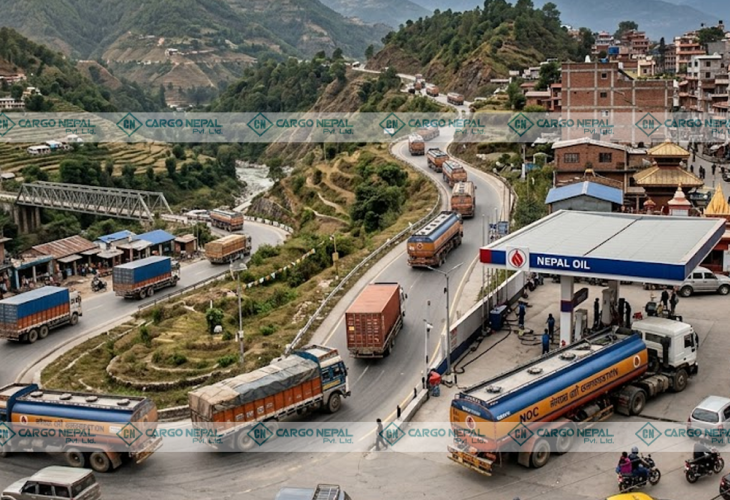
Fuel has always been one of the largest operating expenses in the logistics industry. When fuel prices rise suddenly or supply becomes limited, transportation costs can increase dramatically, putting pressure on cargo companies, freight forwarders, and supply chains. A fuel crisis affects more than just transportation expenses. It can lead to delivery delays, reduced vehicle availability, higher maintenance costs, and lower profit margins.
During such periods, logistics companies face a difficult challenge: continuing to provide reliable service while controlling operational costs. Businesses that react quickly and adopt efficient practices are often able to maintain profitability and customer satisfaction, even in challenging market conditions.
Fortunately, there are several practical strategies that cargo transportation companies can implement to reduce fuel consumption, improve operational efficiency, and minimize logistics costs during a fuel crisis.
Route Optimization: Making Every Kilometer Count
One of the most effective ways to reduce fuel costs is through route optimization. Every unnecessary kilometer driven increases fuel consumption and operating expenses.
Many logistics companies still rely heavily on traditional route planning methods. However, modern route optimization tools can help identify the most efficient routes based on distance, traffic conditions, road quality, delivery schedules, and vehicle capacity.
Route optimization involves:
Even small improvements in route planning can result in significant fuel savings over time. When multiplied across an entire fleet, these savings can have a major impact on overall logistics costs.
Maximizing Vehicle Utilization
A partially loaded truck consumes nearly the same amount of fuel as a fully loaded truck. As a result, inefficient load management can significantly increase transportation costs.
Cargo companies should focus on maximizing the utilization of every vehicle by:
The goal should be to ensure that every trip generates maximum value. Better load utilization reduces fuel consumption per shipment and improves fleet productivity.
Reducing Empty Return Trips
Empty return trips remain one of the biggest hidden costs in the transportation industry. When a truck completes a delivery and returns without cargo, the company absorbs all fuel and operating expenses without generating revenue.
To reduce empty backhauls, companies should:
A truck that generates revenue in both directions can dramatically improve operational efficiency and reduce overall logistics costs.
Improving Driver Performance
Drivers play a critical role in fuel efficiency. Even the most advanced vehicle can consume excessive fuel if it is not driven properly.
Driver training programs should focus on:
Aggressive driving habits can significantly increase fuel consumption. By encouraging fuel-efficient driving practices, companies can reduce operating costs while also extending vehicle life and improving road safety.
Many successful transportation companies implement driver performance monitoring systems and reward drivers who consistently achieve excellent fuel-efficiency results.
Investing in Preventive Maintenance
Poor vehicle maintenance often leads to higher fuel consumption and unexpected breakdowns. During a fuel crisis, maintaining fleet efficiency becomes even more important.
A preventive maintenance program should include:
Well-maintained vehicles operate more efficiently, consume less fuel, and experience fewer costly repairs. Preventive maintenance also helps avoid disruptions that can lead to expensive emergency transportation arrangements.
Improving Delivery Scheduling
Inefficient scheduling can increase fuel consumption and reduce fleet productivity.
Cargo companies should carefully plan delivery schedules to:
Vehicles that spend less time waiting and more time moving efficiently consume less fuel and generate higher returns.
Effective scheduling also improves customer service by increasing delivery reliability and reducing delays.
Leveraging Technology and Data Analytics
Technology has become one of the most powerful tools for controlling logistics costs.
Modern fleet management systems provide valuable insights into:
GPS tracking and telematics systems allow managers to monitor operations in real time and identify areas where improvements can be made.
Fuel monitoring systems can help detect excessive fuel usage, operational inefficiencies, and potential losses. Data-driven decision-making allows logistics companies to continuously improve efficiency and respond quickly to changing conditions.
Strategic Warehousing and Distribution
Transportation costs increase when goods must travel long distances repeatedly. Strategic warehouse placement can help reduce these expenses.
By positioning inventory closer to customers, companies can:
Regional distribution centers can serve as efficient hubs for local deliveries, reducing the need for frequent long-distance transportation.
This approach becomes particularly valuable during periods of rising fuel prices or transportation disruptions.
Exploring Alternative Transportation Modes
Although road transportation remains the primary method of cargo movement in many regions, alternative transportation options may offer cost advantages during a fuel crisis.
Depending on the type of cargo and available infrastructure, companies may consider:
Diversifying transportation methods can reduce dependence on a single mode and provide greater flexibility when fuel costs increase.
The most cost-effective solution often involves combining multiple transportation modes to achieve the best balance between cost, speed, and reliability.
Strengthening Supply Chain Collaboration
Fuel crises affect the entire supply chain, not just transportation providers.
Collaboration between logistics companies, suppliers, distributors, and customers can create opportunities to reduce costs and improve efficiency.
Possible strategies include:
Collaborative logistics models help eliminate duplication, improve asset utilization, and reduce fuel consumption across the supply chain.
Prioritizing High-Value Shipments
During severe fuel shortages, transportation capacity may become limited. Companies must ensure that available resources are allocated effectively.
Priority should be given to:
By focusing on the most profitable and strategically important shipments, companies can maintain financial stability while managing limited transportation resources.
Improving Demand Forecasting
Unexpected transportation requests often lead to costly emergency shipments.
Accurate demand forecasting helps companies:
Businesses that understand customer demand patterns can make more informed transportation decisions and avoid unnecessary costs.
Building Long-Term Resilience
While short-term measures can help reduce fuel costs during a crisis, long-term resilience requires continuous improvement.
Successful cargo companies invest in:
These investments not only improve performance during fuel crises but also strengthen competitiveness under normal market conditions.
Conclusion
Fuel crises present significant challenges for cargo transportation companies, but they also highlight the importance of operational efficiency. Organizations that focus on route optimization, load consolidation, preventive maintenance, driver training, technology adoption, and strategic planning are often better equipped to control costs and maintain service quality.
Reducing fuel consumption is not simply about cutting expenses. It is about building a smarter, more efficient logistics operation that can adapt to changing market conditions and remain competitive over the long term. Companies that continuously seek ways to eliminate waste, improve productivity, and optimize transportation resources will be in the strongest position to navigate future fuel crises successfully.